
The Periodic Table
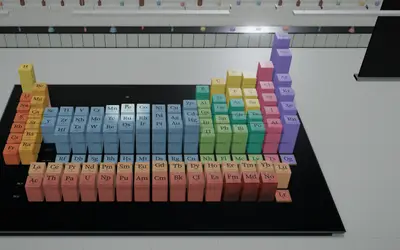
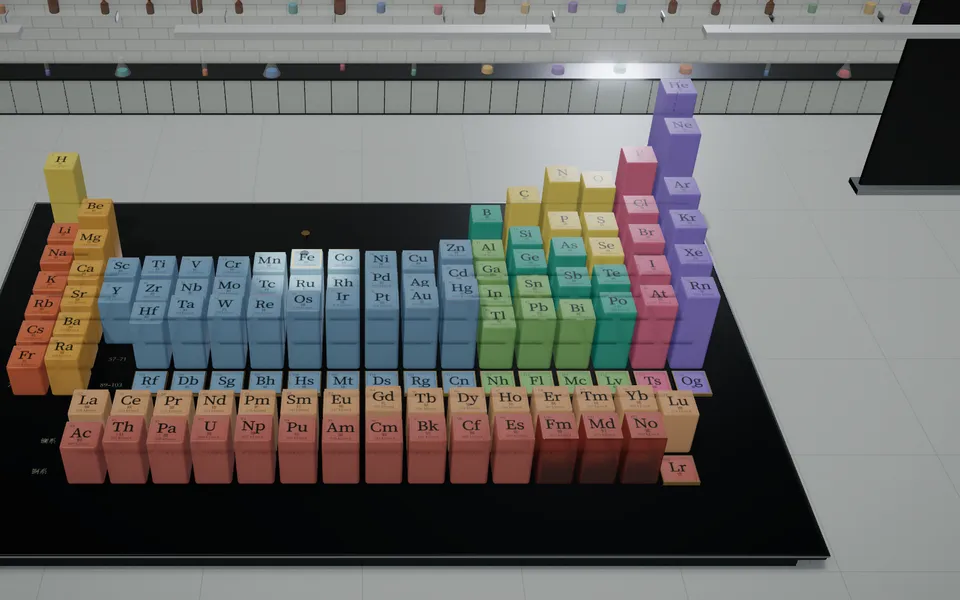
All 118 elements, raised into a specimen hall by ionization energy, atomic radius, melting point and more.
CHEMISTRY
Into the microscopic world
Where did the sugar go? Why does iron rust? Follow visible changes into the invisible world of particles.
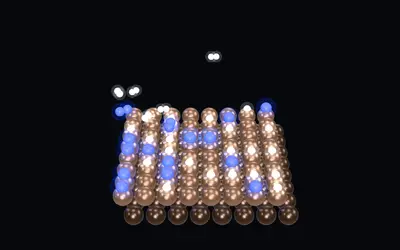
118 elements, electron clouds, molecular shapes and growing crystals: what matter is built from.
4 labs17 experiments
All 118 elements, raised into a specimen hall by ionization energy, atomic radius, melting point and more.
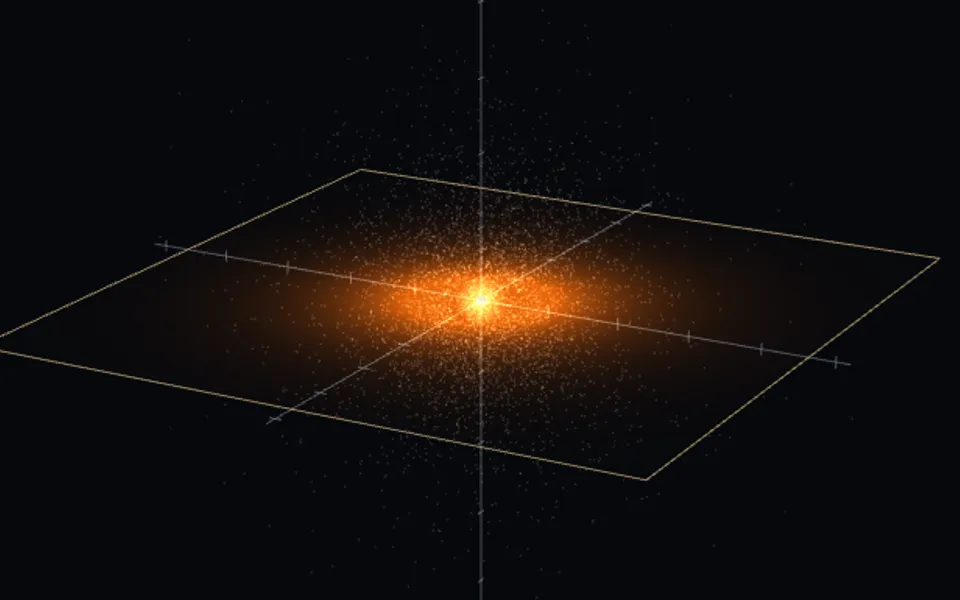
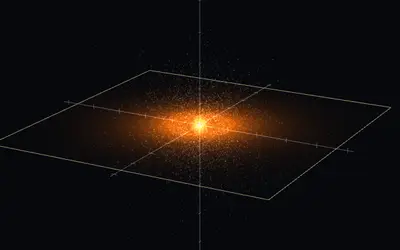
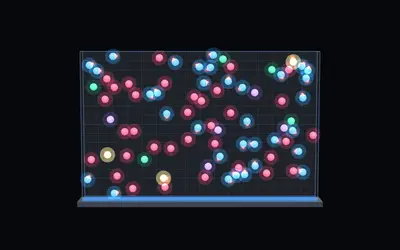
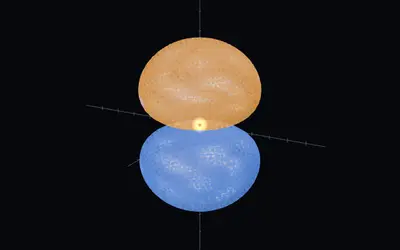
An electron has no path, only probabilities. Watch dots build up into a cloud, then place the electrons yourself.
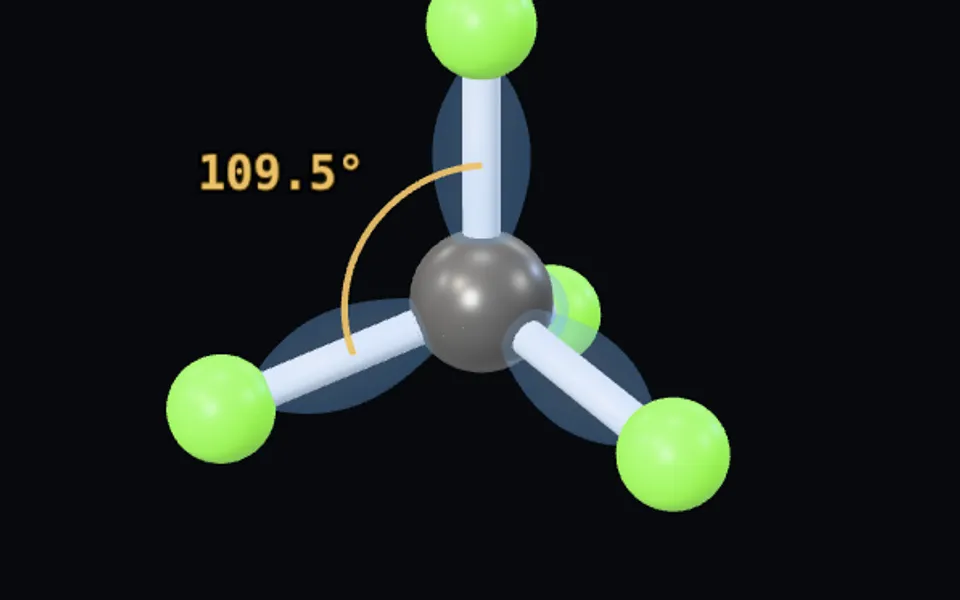
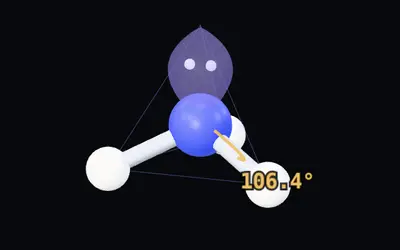
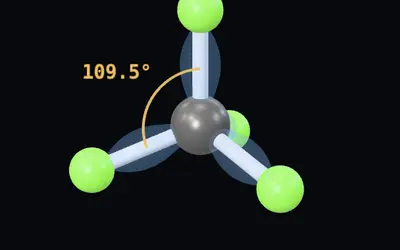
Drag the electron pairs around a central atom and watch them spring back to the lowest-energy shape.
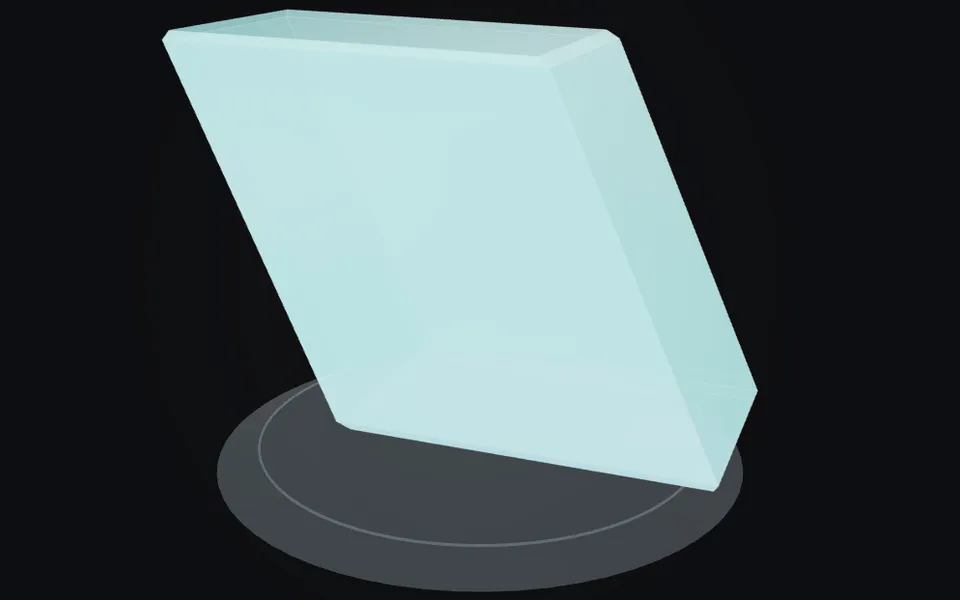
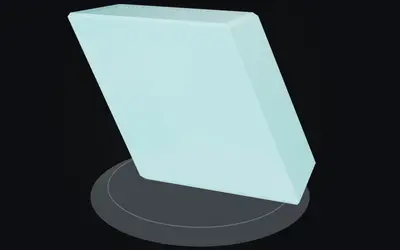
Start from a seed and watch fluorite, quartz and other minerals grow faces that follow their own symmetry.
Molecules must collide hard enough and at the right angle to react; a catalyst gives them another road.
3 labs30 experiments
One glowing reaction box: aim molecules at each other, heat, compress, and watch equilibrium form and shift.
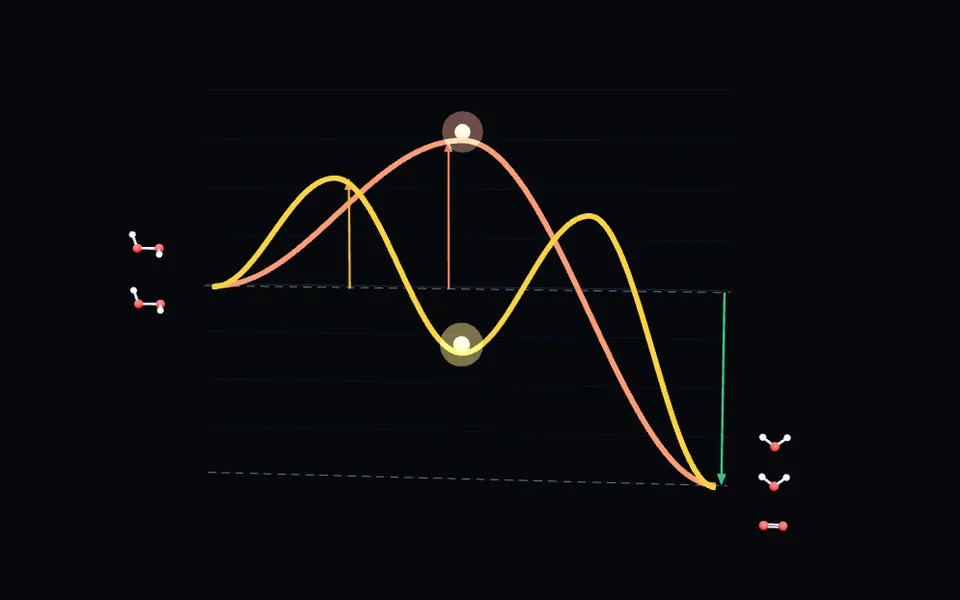
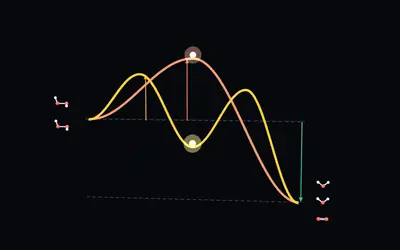
A catalyst gives the reaction a road with a lower barrier: faster, but the same equilibrium.
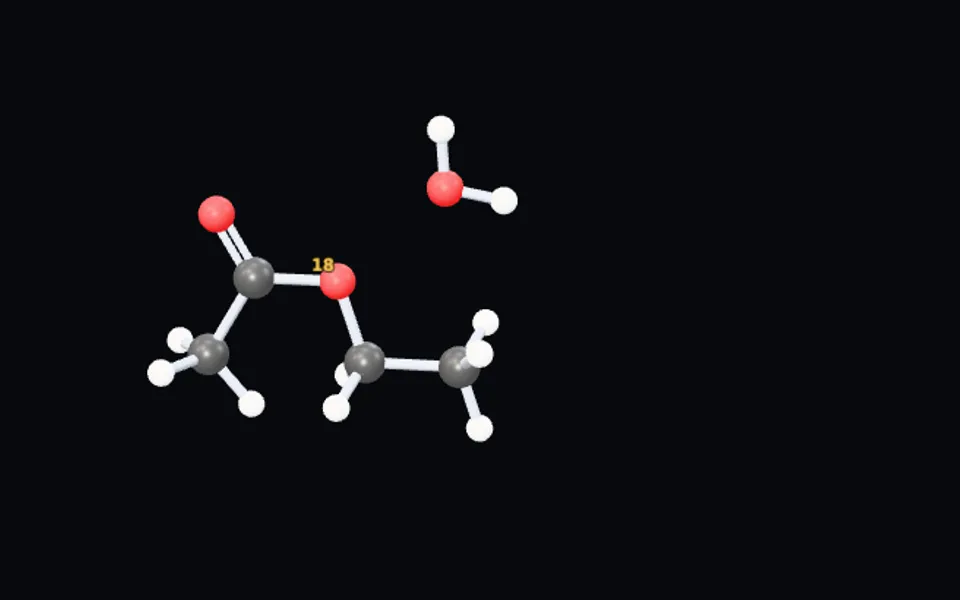
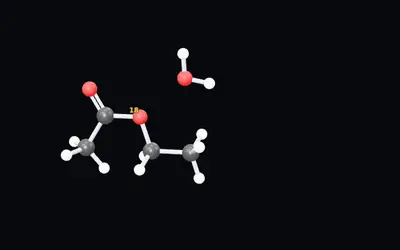
Molecular animations of 19 reactions: where the electrons come from and where they go, with every frame conserved.
Make gases, run titrations, wire up cells: textbook experiments you can carry out step by step.
4 labs33 experiments
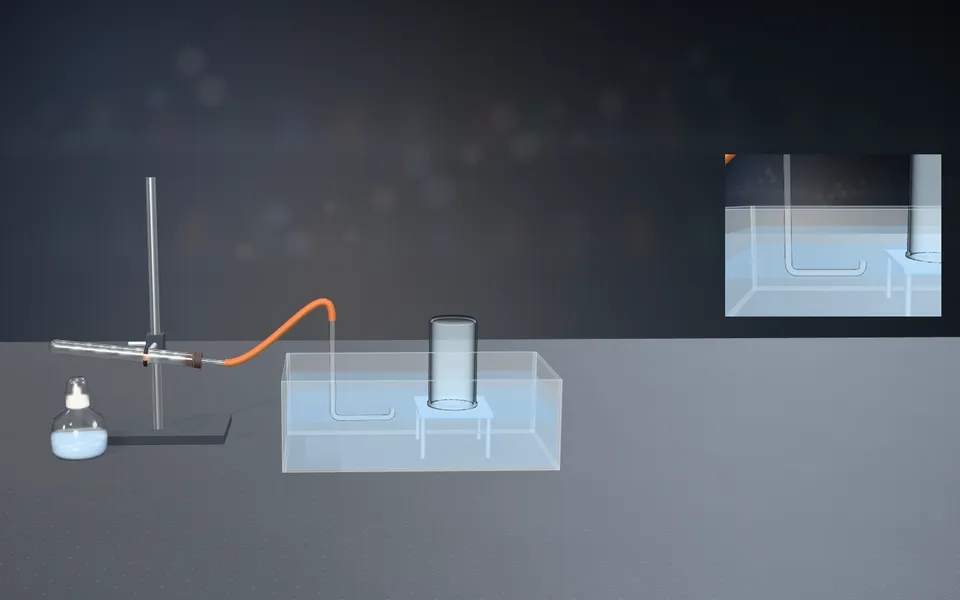
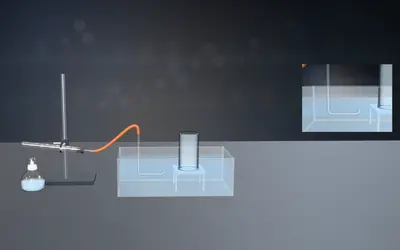
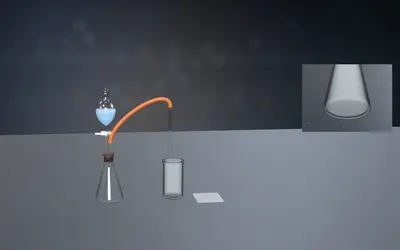
Make oxygen and carbon dioxide, then burn charcoal and iron wire in oxygen.
Dissolve, filter, evaporate in twelve steps: watch the salt enter the water, pass the filter paper and crystallise again.
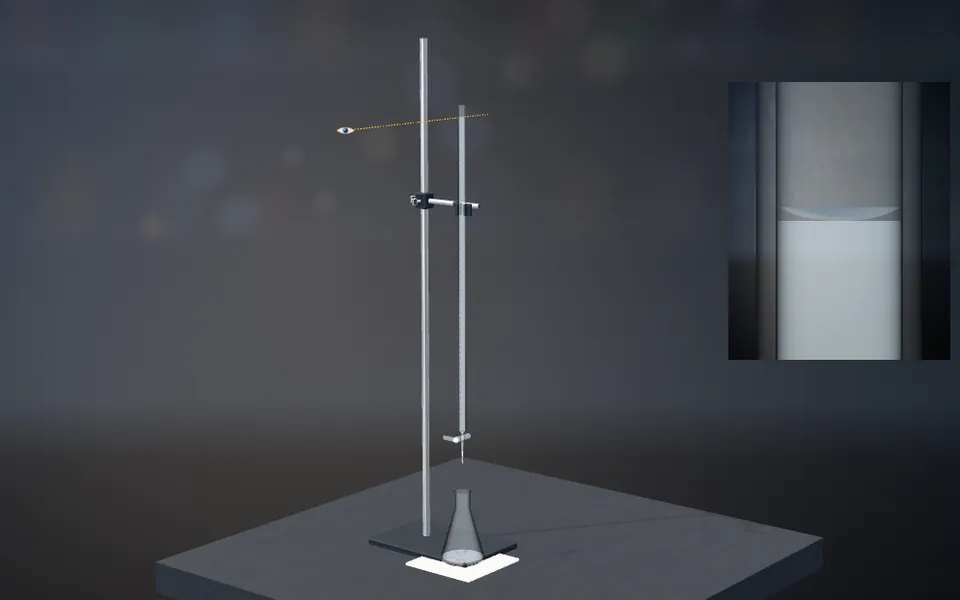
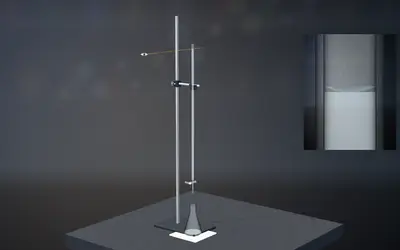
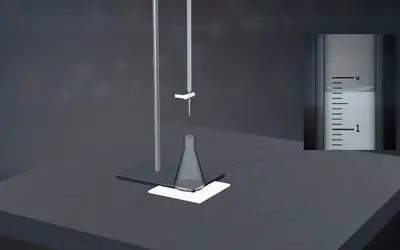
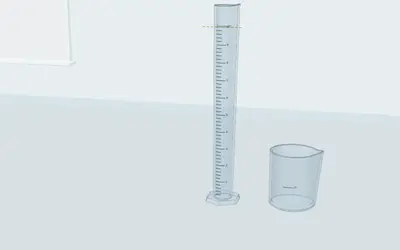
Read a burette, run a titration, then identify ions by precipitates, gases and flame colours.
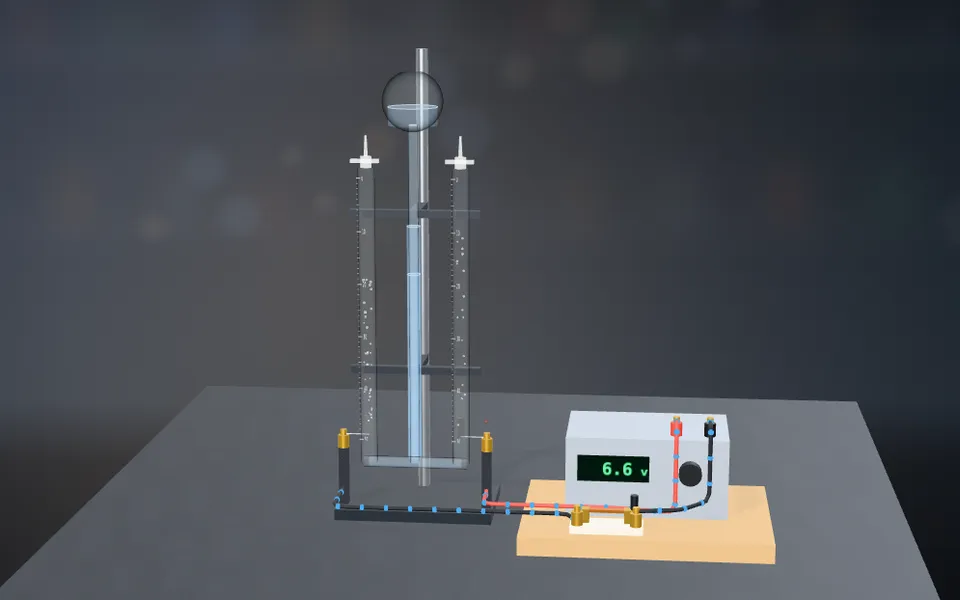
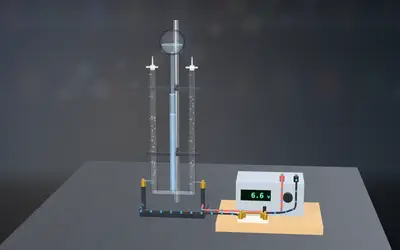
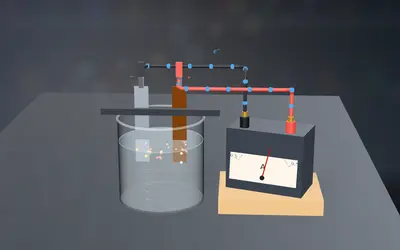
A galvanic cell turns chemical energy into electricity and an electrolytic cell does the reverse: flip the switch, pull the salt bridge, read the meters.
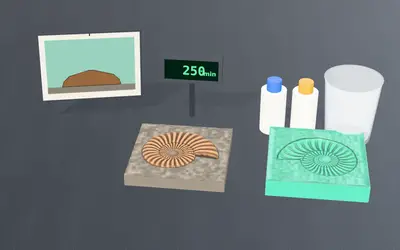
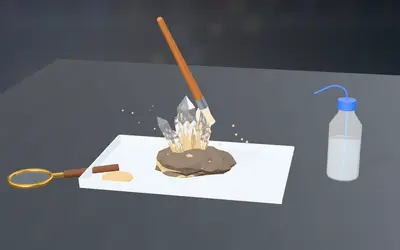
Clean a mineral, cast a fossil, pour a crystal cluster: judge first, then act.
3 labs15 experiments
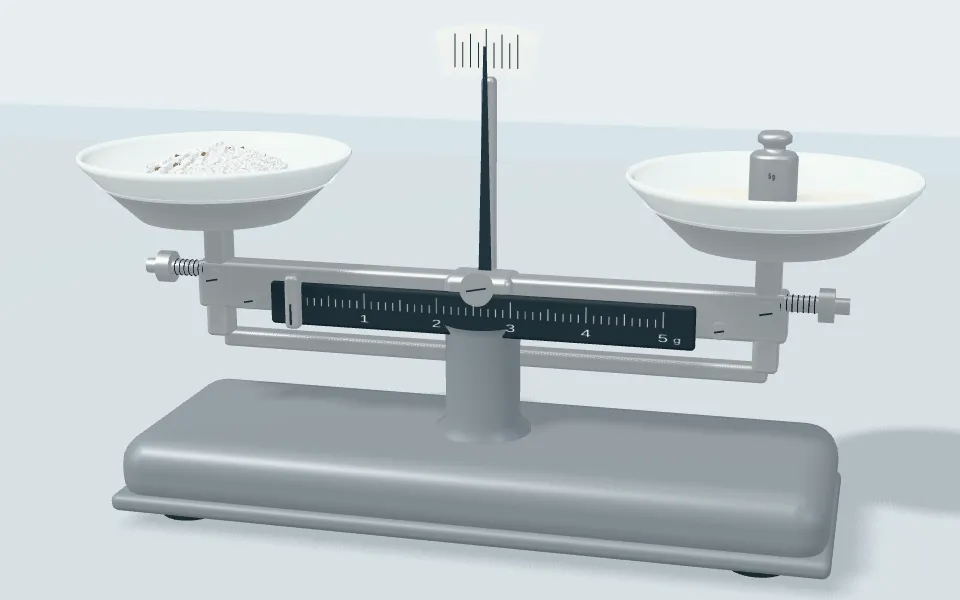
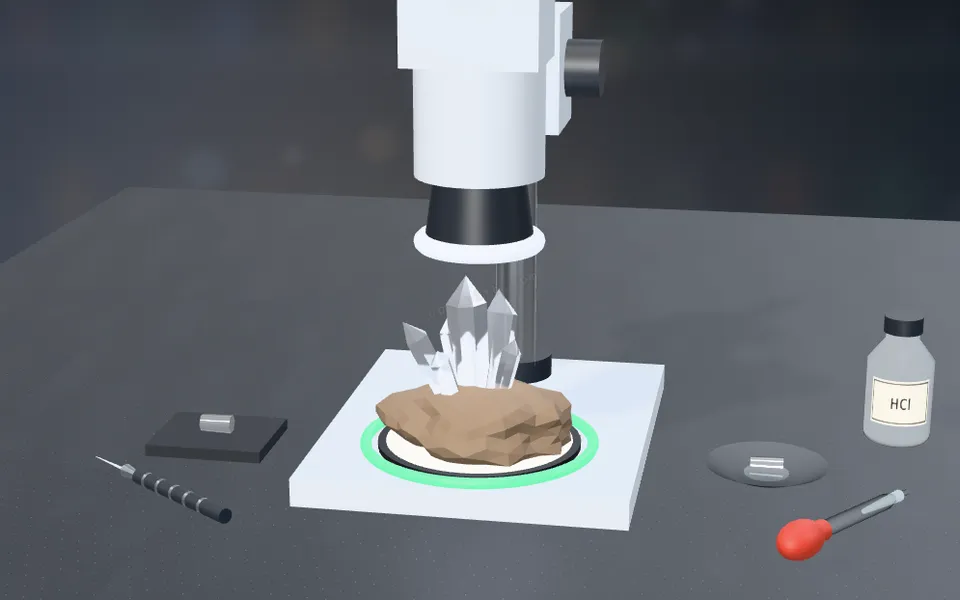
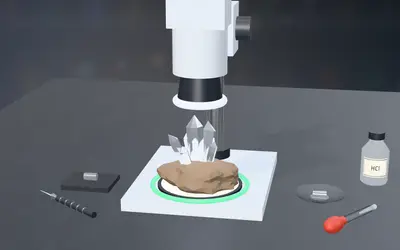
Five topics on one bench: identify before you act, brush off dust, remove an iron stain, watch acid eat calcite until the quartz falls, and tell a petroleum jelly shine from a real glued repair.
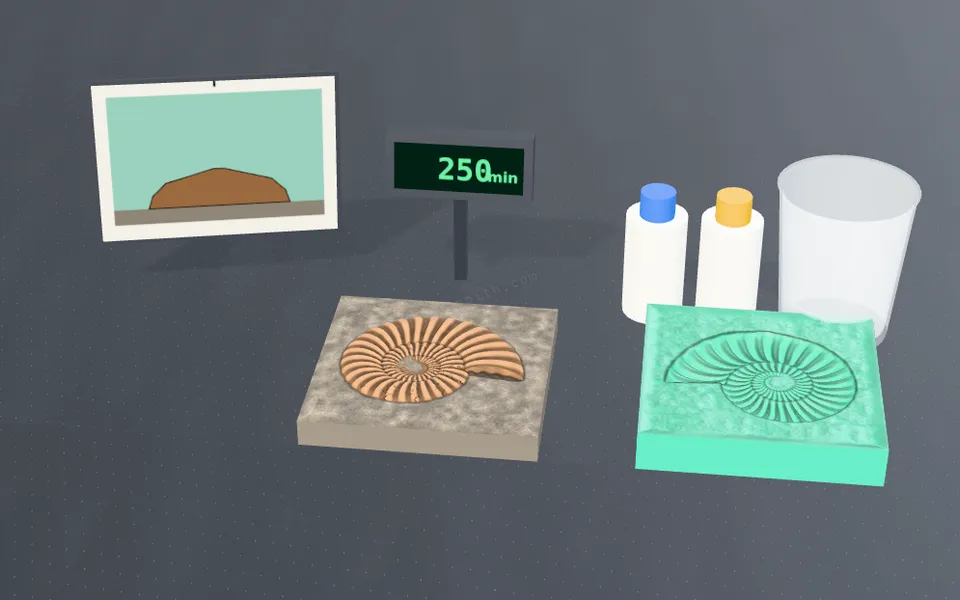
Watch silicone cover an ammonite and peel off as a mould, cast it in plaster and epoxy, check the casts with a caliper, and decide what a coat of colour may claim on a label.
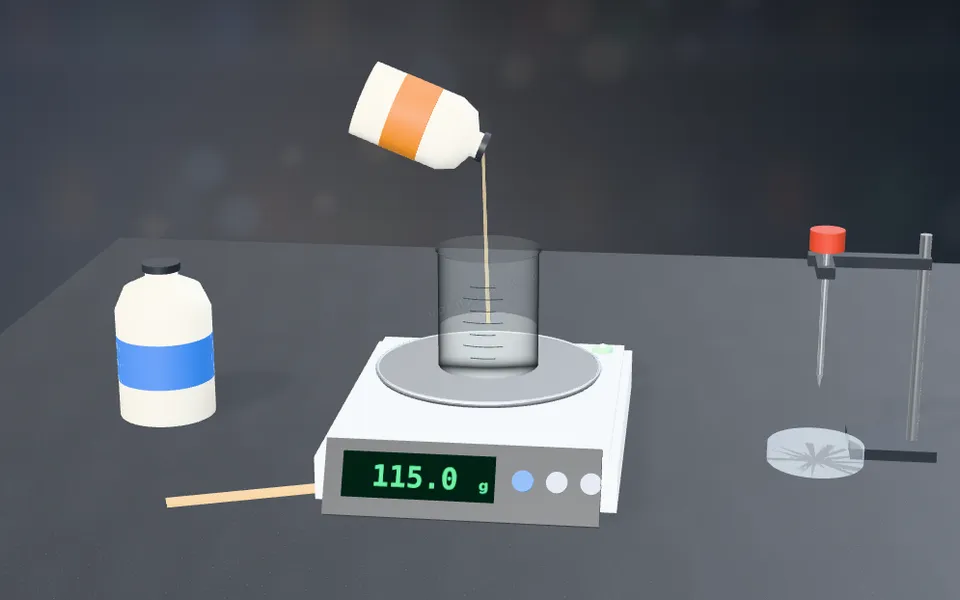
Cast a quartz cluster model in clear epoxy: weigh the mix, watch molecules link into a net, compare thin and thick pours, chase bubbles, then tell the model from real quartz.
SHORT READS
Invisible does not mean absent. The sugar has spread through the water.
Start reading ↓02 / Physical and chemical changesThe key question is whether new substances have formed.
Start reading ↓Invisible does not mean absent. The sugar has spread through the water.
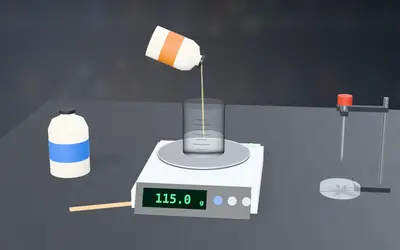
A sugar crystal contains many sucrose molecules. In water, these molecules gradually leave the crystal and spread among water molecules. They are too small to see, so the crystal shrinks and seems to disappear.
Under ordinary conditions, dissolving sucrose in water is mainly a physical change: the sucrose molecules remain sucrose. If nothing spills or evaporates, the solution’s total mass equals the original mass of the water plus the sugar.
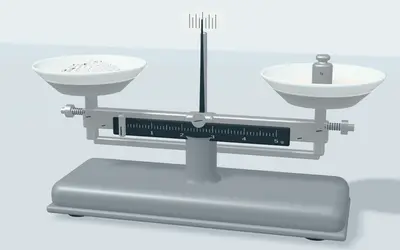
At a given temperature, a fixed quantity of water can dissolve only a limited amount of sugar. Once saturated, additional sugar remains at the bottom. Stirring usually speeds up dissolving, but does not indefinitely increase the amount that can dissolve at that temperature.
110 g. Dissolving changes how the sugar is distributed, not whether its mass exists.
The key question is whether new substances have formed.
When ice melts, its shape and state change, but it still consists of water molecules. This is a physical change, as is freezing water into ice.
Iron gradually rusts when exposed to water and oxygen. Rust contains substances different from the original iron, so rusting is a chemical change, not simply a change in colour.
A colour change, bubbles or heating can provide clues, but none alone proves a chemical change. Boiling water produces bubbles while remaining water. Always ask whether new substances have formed.
Burning forms new substances, including gases and ash, so it is a chemical change. Cutting changes the shape. This is a conceptual comparison; no fire experiment is needed.